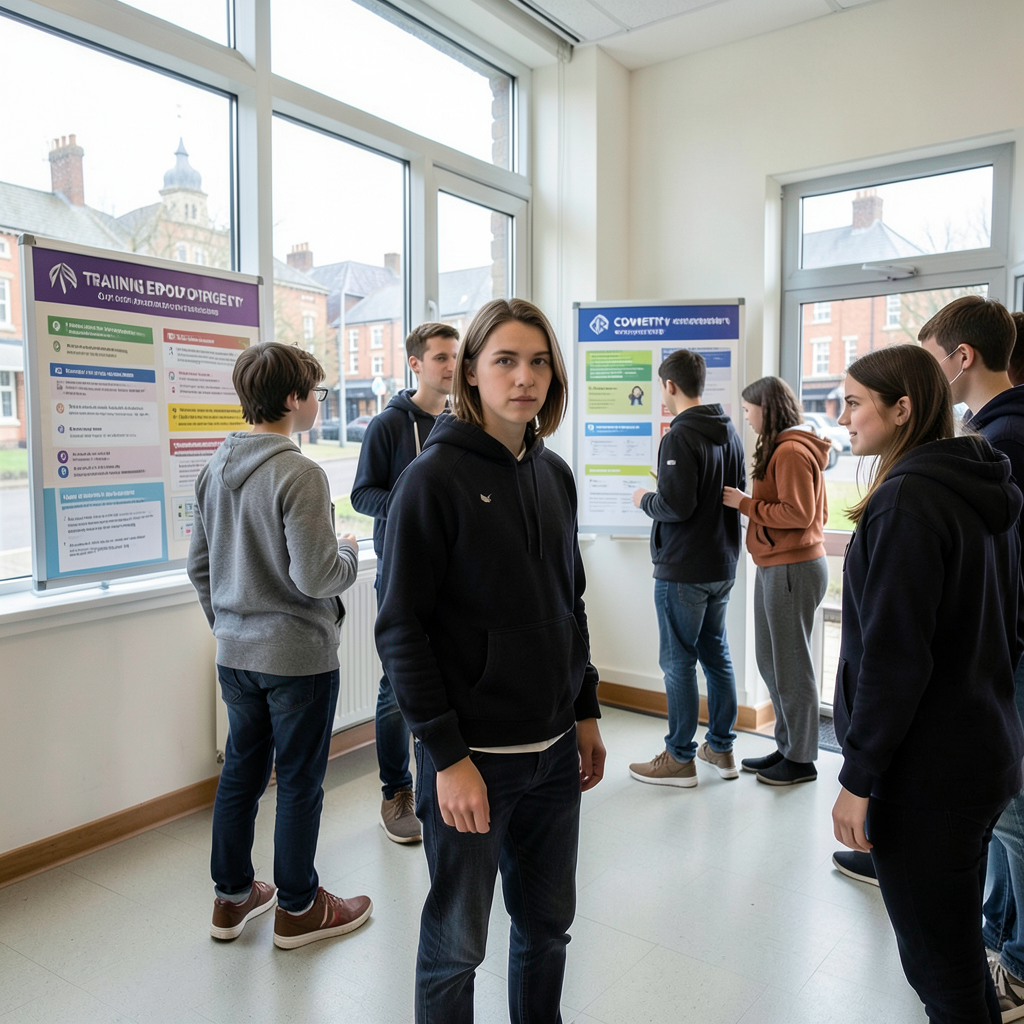

Coventry’s youth unemployment rate stands below 3%, with the city’s MP endorsing initiatives by the newly appointed Prime Minister to expand prospects for teenagers and young adults.
Exactly 247 of Coventry’s young people, representing 2.7%, fall into the NEET category. This figure pales in comparison to Derby, which registers the highest percentage nationally at 7.1%. Stockton and Blackpool round out the three worst-affected areas.
The city’s historical data also presents a favourable picture. The proportion of NEETs dropped to 2.1% in 2021/22 during the health crisis, while this period’s results show marked improvement following an eight-year peak of 3.6% the previous year.
Neighbouring Warwickshire records 1.9% of its young people classified as NEET.
Analysts have cautioned that the actual figures are probably higher, as numerous young people’s circumstances remained unclear to the local authorities responsible for collecting the data.
The Prime Minister Andy Burnham this week announced reforms to the education system that will establish new technical learning routes from the age of 14.
From Year 10 onwards, pupils will have the option to study essential academic subjects alongside quality technical programmes. Coventry pupils will, for instance, be matched directly with employment openings across the West Midlands, incorporating periods working with nearby businesses to gain practical workplace knowledge.
Mary Creagh, the MP representing Coventry East, has expressed strong support for these measures. She stated that nearly one in ten young people in her constituency are currently outside the workforce. This announcement represents a significant turning point that will unlock the potential of local youth by linking them with employment opportunities available in their immediate area.
She explained that elevating technical and vocational learning to equal standing with traditional academic routes would ensure more Coventry school-leavers emerge with valuable abilities, self-assurance and prospects for achievement, irrespective of their family circumstances. The employment landscape is evolving rapidly, and the education system must evolve accordingly. She desires for every young person in the city to access a genuine pathway towards stable, rewarding employment, not solely those pursuing conventional academic studies.
Andy Burnham said that British students have for too long been pressured to follow an academic route in order to thrive and receive recognition. The entire schooling structure has revolved around this approach, which has disadvantaged those seeking technical credentials.
He expressed his ambition for an education system grounded in equal respect for academic and technical routes, offering all young people a transparent trajectory through life. From this point forward, Britain would esteem manual trades as highly as university degrees.
In what he described as a fundamental restructuring of education, new technical pathways would be introduced from age 14, distinguished routes enabling pupils to study core academic material alongside the practical abilities, specialist understanding and real-world exposure required to secure quality positions in their local communities. His message to young people was clear: whichever field they pursue, whether in construction, digital skills, humanities, mathematics, manufacturing or vehicle repair, they would acquire the necessary competencies and earn the recognition they merit.
Addressing Britain’s youth unemployment challenge would demand a thorough transformation of current practices, and this administration was committed to delivering exactly that. His goal was to guarantee that the education system presents no barriers or dead ends for young people. The changes unveiled would represent merely the initial phase of efforts to rebuild opportunity and optimism nationwide.